
Quin
Role: UX Design, UX Research
Duration: 8 weeks
Tools: Figma
Platform: Mobile IOS App & Responsive Web
A Blockchain-Backed Photo Verification Platform for Journalistic Integrity
Misinformation spreads faster than facts—especially when weaponized through images. QUIN is a cross-platform system that empowers journalists to source authentic, tamper-proof visuals at speed.
I led the user research and UX design for this project, done on a team of two designers during the Master’s program at California College of the Arts.

The Problem
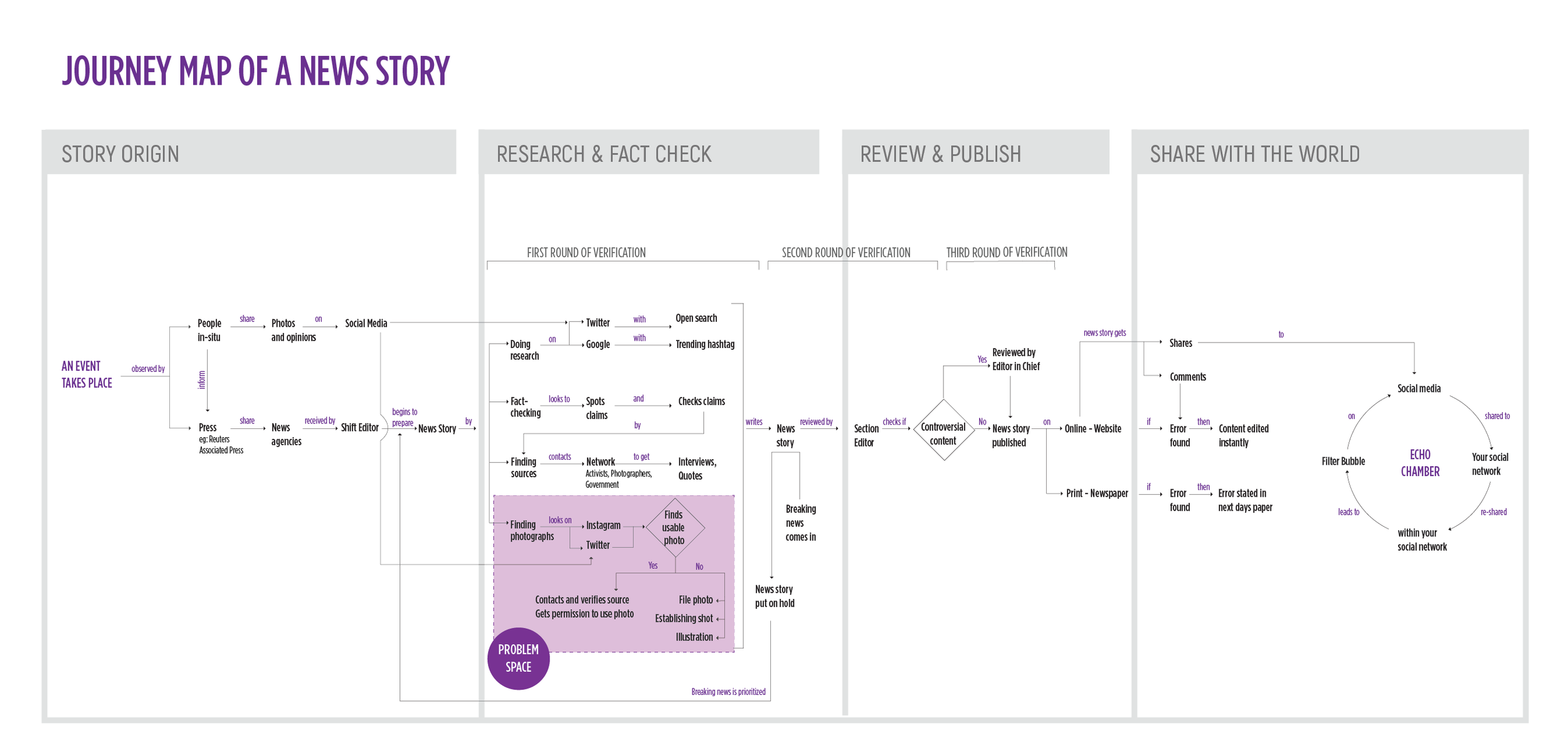
The Crisis in Visual Credibility: In the race to break news, journalists often rely on user-generated content. But current verification methods, such as reverse image searches, metadata inspection, are slow, manual, and prone to failure.
Discovery & Research
To understand this global challenge, we interviewed journalists and media professionals.
Key Insights:
Speed vs. Trust Trade-off: Verification slows reporting
No Source Trail: Images spread without provenance
Lack of Standardization: Verification varies wildly across outlets
Reader Fatigue: Low public trust in what they see

The Opportunity
How might we…
Create tamper-proof visual evidence that’s immediately verifiable?
Enable real-time capture and validation by trusted sources on the ground?
Build a transparent, scalable system that integrates into journalism workflows?
The Solution
A secure cross-platform system to capture, verify, and source authentic images with speed and integrity.
Mobile App: Capture & Authenticate
Camera-first UX: Users capture photos directly in-app
Metadata Lock: Time, GPS, and device info automatically captured
Blockchain Integration: Photo + metadata recorded instantly, creating a digital fingerprint
Contributor Tools: Tag location, topic, or events to aid discovery
User Types: Citizen journalists, field photographers, freelancers
Design Principle: Verification by default, not afterthought.

Web Portal: Discover & Source
Browse By Need: Filter by hashtag, location, or incident
Image Requests: Newsrooms can post geo-tagged content requests
Download Packages: Images come bundled with verified metadata + audit trail
User Types: Editors, newsroom leads, investigative journalists.


Validation & Iteration
From Concept Generation to Early Testing
We created 3 vision posters to test conceptual framing (trust-first, speed-first, citizen-first). These helped align with journalists’ values and mental models.
We tested early flows with journalists, validating tasks like image tagging, uploading, and sourcing content.


Impact & Feedback
System Outcomes
End-to-end flow from real-time capture → verification → newsroom usage
Balanced credibility and speed for global news cycles
Closed the loop between field contributors and publishers
“This gives us speed without sacrificing trust. It could change how we source breaking visuals.” — Editor
Learnings & Next Steps
Learnings
UX decisions must align with trust models: Users need to feel verification without doing more work.
Scalability requires nuance: Local contributors need global validation frameworks.
Next Steps
DSLR compatibility for high-fidelity field work
Subscription tier for newsrooms to expedite licensing
Content moderation layer to flag manipulated content